
Bathroom timber floors in Brisbane faces unique challenges that no other room in your home does. Constant exposure to moisture, steam, humidity, and temperature fluctuations from showers and baths can cause warping, cupping, discoloration, and mold growth on unprotected hardwood. Professional bathroom floor sanding strips away water-damaged surface layers and old finishes, while expert polishing with moisture-resistant coatings creates a protective barrier that withstands daily wet conditions.
Full Restoration vs. Maintenance: When to Sand, Polish, or Re-coat?
Not every bathroom floor requires a heavy-duty sand. Depending on the current state of your timber’s wear, we determine the most effective treatment to ensure the wood remains protected without unnecessary intervention.
The Full Sand & Polish (Total Restoration)
This is necessary when the protective seal has been completely breached. If you notice the timber grain starting to turn gray, or if there are deep indentations and splinters, a full sand is required. This process removes the damaged top fibers of the wood, bringing it back to a brand new state before applying a multi-stage waterproofing polish.
The Buff & Polish (Maintenance Coating)
If your floor still retains its natural color but has lost its pop or looks dull and scuffed, a maintenance polish is the better option. Often called a “Buff and Coat,” this involves lightly abrading only the very top layer of the existing finish, not the wood itself and applying a fresh high-performance top coat. This reinforces the moisture barrier before the timber underneath becomes exposed to damage.
Technical Sanding (Corrective Leveling)
Sanding without a full polish is a specialized corrective step. It is used when boards have become uneven over time or after a repair where new timber has been installed next to old. We sand the surface to a perfectly flat, uniform level so that the subsequent polishing stage can bond correctly across the entire floor.
Get a Free Quote Call: 0418 882 678
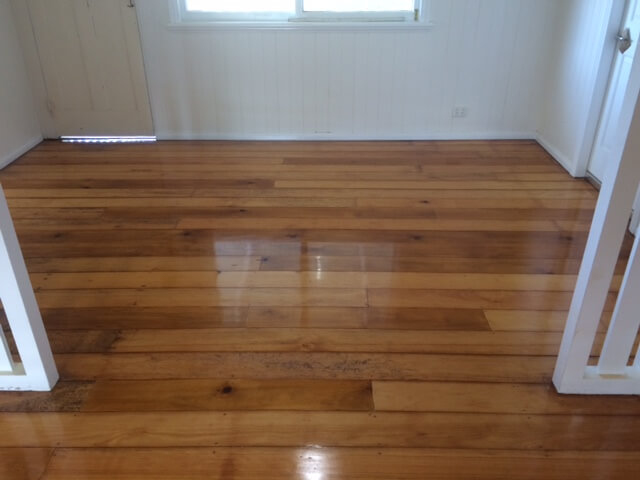
floor sanding and polishing
What Are The Best Timber Types For Bathroom Floors?
We recommend teak wood for bathroom but you can also opt for spotted gum, white oak or ironbark.
- Teak: The gold standard for water resistance. It contains high levels of natural resins and oils that act as a built-in waterproof barrier.
- Spotted Gum: An Australian favorite with high density and natural tannins that repel moisture and provide high durability.
- White Oak: Unlike Red Oak, White Oak has a unique cellular structure called “tyloses” that plugs the wood’s pores, making it nearly “watertight.
- Ironbark Blackbutt: These ultra-dense hardwoods have a low porosity rate, meaning they absorb significantly less environmental humidity than softer timbers.
Selecting the right timber for a bathroom isn’t just about aesthetics; it’s about managing the “Expansion and Contraction” cycle caused by steam and direct water contact.
Top-Tier Moisture-Resistant Timber Types For Bathroom Floor
Which Finish Is Best For Bathroom Wood Floors?
For bathrooms, we recommend water based polyurethane and for commercial and high usage bathrooms it is the two-pack poly polish is excellent choice. During the Free On-Site inspection, we will suggest what is best for you.
Always opt for a satin or matte finish rather than high-gloss. Glossy surfaces tend to show water spots and soap scum much more clearly and can become dangerously slippery when wet. The ideal coating must create an impermeable barrier that prevents water from penetrating the wood grain while remaining flexible enough to handle the expansion and contraction caused by temperature fluctuations. Choosing the right finish depends on your household’s traffic levels and your desired aesthetic.
Caring for Your Timber Bathroom Floor: A Warm and Friendly Guide
Keeping your beautiful timber floor in tip-top shape in a bathroom, where moisture is always lurking, means being proactive about controlling dampness. Wood is a bit like a sponge and it soaks up and releases moisture from the air, consistent care is essential to stop it from warping, cupping, or losing its finish.
Daily Little Clean-Ups
Dust and tiny bits of grit can be surprisingly rough on your floor, acting like sandpaper under your feet and wearing down the protective sealant. Use a soft-bristled broom or a vacuum to gently sweep away debris and hair. In a bathroom, humidity can make dust stick to the wood grain, so regular sweeping keeps this buildup at bay.
Quick Moisture Management
In the bathroom, spills aren’t just water, they can be toothpaste, soaps, or even acidic cosmetics. Standing water is the main culprit behind timber stains and boards warping upwards. Always wipe up splashes right away with a microfiber cloth and make sure the area is completely dry to stop moisture from seeping into the gaps.
Smart Humidity Control and Air Flow
Steam from hot showers is your floor’s worst enemy when it comes to staying the same size and shape. Make sure your bathroom’s exhaust fan is the right size for the room and leave it on for 15–20 minutes after each shower. If you can, open a window to get some cross-ventilation going, keeping the humidity level steady and preventing the wood from swelling.
Keep an Eye on Hardware and Boards
The humid bathroom environment can make floor fixings corrode faster. Regularly check for nails that have popped up or boards that have come loose. A loose board often means there’s a moisture problem lurking beneath; catching it early stops water from getting to the subfloor and causing rot.
Regular Resealing (The Water-Repelling Shield)
Unlike a living room, your bathroom floor depends a lot on its top coat to stay protected. Every 2 to 4 years, check if water still beads up on the surface. If it doesn’t, it’s time for a professional “buff and coat” to bring back that water-resistant barrier without having to sand the whole floor.
Get Professional Moisture Checks
Just looking at your floor might not tell you what’s happening underneath. Professional floor sanders use a Hygrometer to spot hidden dampness in the timber or subfloor before it turns into permanent damage.
Extra Preventive Steps
- Bath Mats: Place high-quality, breathable cotton mats near the shower and sink to catch drips. Stay away from rubber-backed mats, as they trap moisture against the wood, which can make the finish peel or the wood change color.
- Perimeter Sealing: Make sure the silicone seal between your floorboards and the bathtub or wall tiles is in good shape. This stops water from seeping into the edges of the timber.
Pro Tip for Keeping Your Bathroom Floor Looking Great for Years
Using a steam mop on hardwood floor is the biggest mistake you can make. While steam mops are great for tiles, they force high-pressure moisture straight into the wood pores and under the finish. Instead, use a well-wrung ‘dry’ mop with a pH-neutral timber cleaner to keep your bathroom floors sparkling without the risk of water damage.
We provide custom treatment tailored for your bathroom by using latest methods and equipment specially designed for bathroom flooring
Get a Free Quote Call: 0418 882 678
Frequently Asked Questions for Bathroom Floor Sanding and Polishing
Is timber flooring favorable for bathrooms?
Yes, timber floors are suitable for bathrooms due to their durability, aesthetic appeal, and long life. Hardwoods like Blackbutt, Jarrah, Oak, and Teak are sturdy and water-resistant, making them ideal for humid environments.
How can I prevent bathroom floor timber from rotting?
Mold and fungus infestation causes the wood to rot and make it slippery. A moist environment and high humidity are suitable habitats for fungal growth. To prevent such infestation, use area rugs and mats and clean the spills promptly.
Can mold on bathroom timber floors be removed by sanding?
Surface mold can be sanded away and treated with anti-fungal primer. Deep mold that has penetrated the timber grain may require board replacement.